In a world where the phrase “It takes a village to raise a child” is often quoted but rarely lived, Netflix’s Adolescence lands like a punch to the gut. The four-part drama isn’t just a crime story; it’s an unsettling reflection of how fragile the teenage experience has become — and how the systems meant to support young people are fraying at the edges.
1. The Invisible Child Behind the Bedroom Door
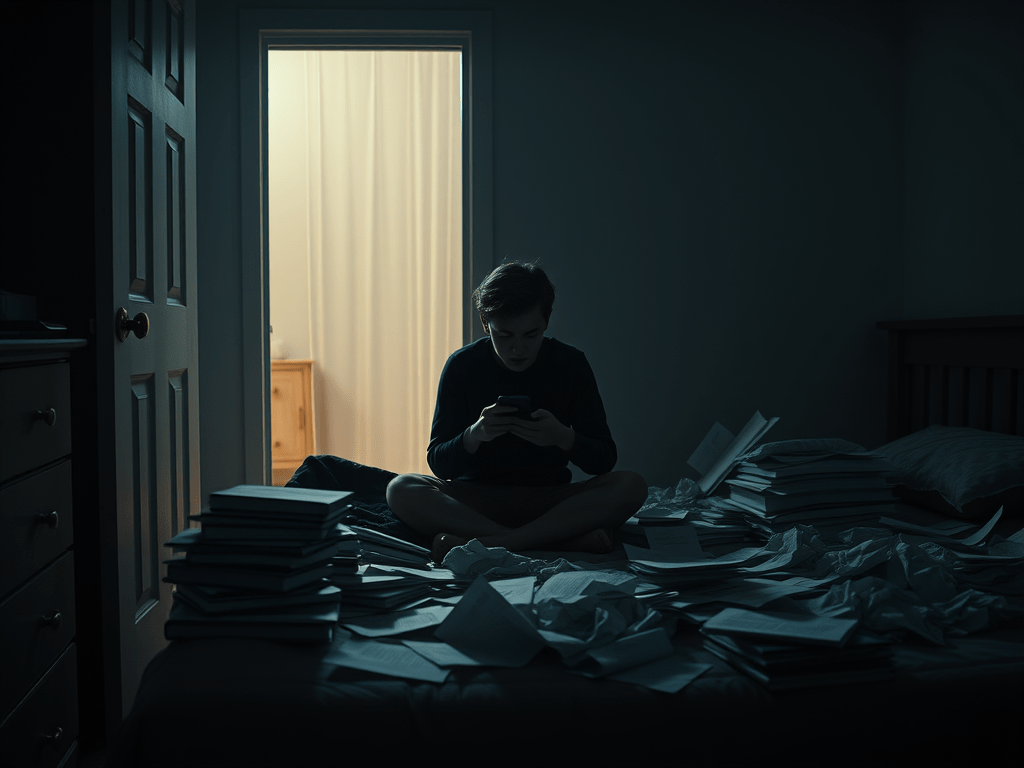
One of the most haunting moments in the series comes towards the end, when Jamie’s father, Eddie, says they always thought Jamie was just in his room. Safe. Present. Home. But emotionally, he was worlds away. It’s a moment that stings, especially for parents juggling work, life, and the constant background hum of exhaustion.
Modern parenting often comes with the illusion of presence. We’re nearby, yes — in the next room, just a call away — but are we really there? Adolescence makes that question unavoidable. Jamie’s descent wasn’t sudden. It was slow, silent, and shielded by a closed door.
2. The Digital Divide: Lost in Translation
In one scene, DI Bascombe’s teenage son scoffs at his dad for not understanding the meaning behind emojis. He says, “Every emoji has a meaning.” What sounds like a throwaway line actually cuts deep. It’s not just about tech literacy — it’s about emotional fluency.
Teenagers today speak a language of symbols, online codes, subcultures, and hidden messages. And when the adults in their lives can’t read the signs, it’s easy to miss the warning lights. Not understanding isn’t the problem. Not trying to understand might be.
3. Bullying and the Fragile Teenage Psyche
The series doesn’t shy away from showing how cruel teenagers can be to each other — the casual, relentless bullying, the mocking, the name-calling. For Jamie, those words weren’t just unkind; they were chisels, slowly carving out his self-worth.
Teenagers feel things deeply. A throwaway comment to an adult might mean nothing, but to a 13-year-old? It can be earth-shattering. And in the echo chamber of adolescence, those voices grow louder, darker, and harder to ignore.
4. When the Village Fails: Schools, Teachers, and Respect
One of the most difficult scenes to watch is the chaos in the classroom. The students are loud, rude, dismissive. The teacher stands there, helpless, trying to hold it together. It’s heartbreaking.
Somewhere along the line, respect got lost. Teachers, once seen as figures of guidance and authority, are now fighting battles on every front — educational, emotional, disciplinary. And often, without the backing of the very parents whose children are acting out.
It’s a reflection of what many teachers face daily. Behaviour goes unchecked because accountability has become complicated. And when teachers aren’t respected, everyone loses — especially the students.
5. When Every Mirror is Cracked: What Do We See in Ourselves?
Adolescence doesn’t offer answers. It doesn’t point fingers or wrap things up with a lesson. Instead, it leaves us in the mess. A child is lost. A family is broken. A community is left asking questions they should’ve asked sooner.
Maybe the takeaway isn’t a solution, but a challenge. To look at the silence in our own homes. The overlooked signs. The unchecked attitudes. The half-read messages and the assumptions we cling to.
Because maybe, just maybe, the village isn’t gone. Maybe it just forgot to look up.




 Life in Full HD
Leave a comment