
Have you ever paused mid-scroll and asked yourself—how much does my technology know about me? More importantly, who has access to that information?
Netflix’s Black Mirror, a series renowned for its chilling reflection of our tech-driven society, delivers an especially gut-wrenching message in Season 3, Episode 3: Shut Up and Dance. It’s not sci-fi. It’s not about some distant dystopia. It’s about now.
The story follows a teenage boy who downloads a seemingly innocent malware-removal tool. But instead of cleaning his laptop, it infects it. The hackers activate his webcam and capture footage of him in a moment of personal vulnerability. Soon after, an email arrives. No demand for money. Just simple instructions: Do what we say, or everyone sees the video.
What starts as a seemingly isolated blackmail incident spirals into a sinister puppet show involving several victims, each manipulated into completing disturbing tasks under threat of exposure. The final revelation isn’t just shocking it’s devastating. These weren’t random victims. Each had a secret. Each was owned.
The Power of Secrets, The Control of Data
The episode speaks to a chilling truth: our secrets make us vulnerable. And in the digital world, secrets are no longer just whispered in corners—they are stored, archived, cached, and logged.
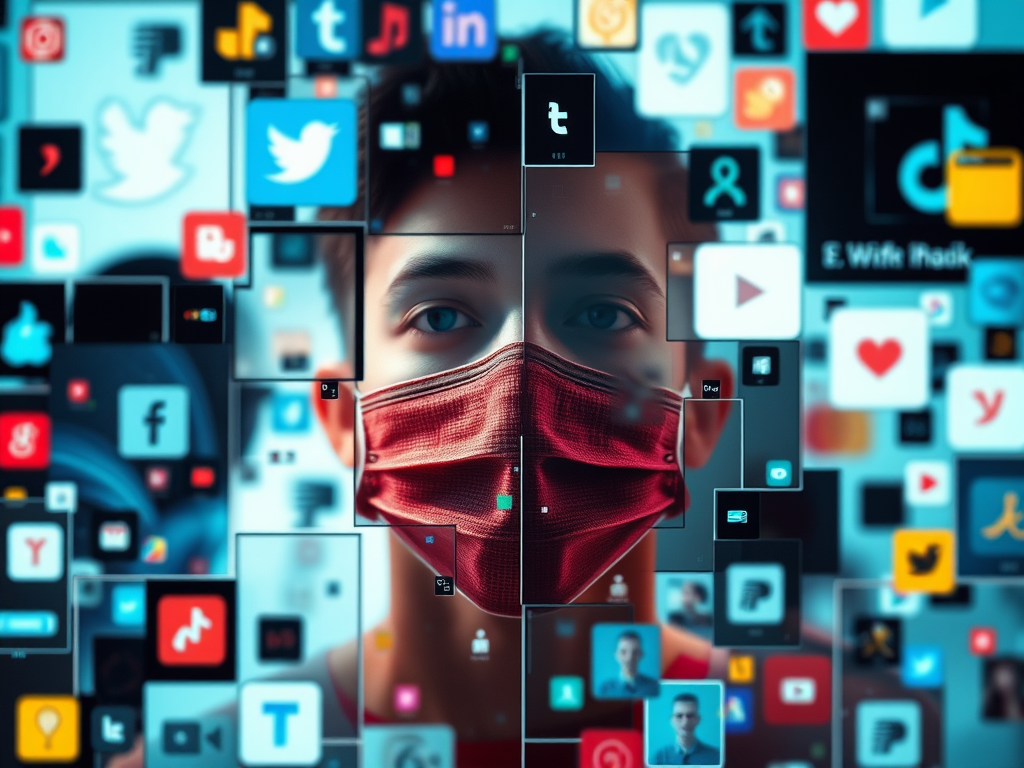
Every app we download, every photo we share, every search we make these are breadcrumbs that can be followed. Our behaviour, our interests, even our fears are captured in real-time. This is the age of information, but also of exposure.
It raises the terrifying question: are we in control of our data, or are we just pawns in someone else’s algorithm?
From Fictional Hackers to Real-Life Power Plays
It’s tempting to brush Black Mirror off as entertainment, but look closer. The reality isn’t far behind.
Social media platforms, search engines, and apps are built on the economy of attention and behaviour tracking. Giants like Facebook (now Meta) and X (formerly Twitter) aren’t just platforms they’re psychological mirrors. They learn, predict, and eventually manipulate our choices. In fact, in a recent interview, a former Facebook employee revealed that Mark Zuckerberg once considered running for US president, leveraging the massive behavioural data at his fingertips.
Meanwhile, Elon Musk’s takeover of Twitter sparked conversations about political influence and digital power. With the right data, one doesn’t just advertise—they influence. One doesn’t just observe—they control.
The Double-Edged Sword of Technology
Let’s be clear: technology is not the villain. In many ways, it’s a marvel. It’s made our lives more connected, elegant, and efficient. It’s enabled innovation at a scale previously unimaginable.
But the danger begins when humanity leans into the darker side of technology—when it’s used not to empower but to exploit, not to connect but to control. When secrets become currency, and shame becomes a tool.
As individuals, we must ask: What are we trading for convenience? And at what cost?
Reclaiming Our Digital Agency
So, do we still have the power to protect ourselves? The answer isn’t simple, but it starts with awareness. We need to move beyond passive acceptance and begin practising digital hygiene:
- Question the apps you install
- Read privacy policies (or at least summaries)
- Use encryption and multi-factor authentication
- Limit what you share publicly—because once it’s online, it’s no longer just yours
Most importantly, we must keep demanding transparency from the tech giants and push for legislation that prioritises user privacy over profit.
Reclaiming Our Digital Agency
The question lingers long after the credits roll: Are we really in control of our digital lives?
It’s easy to believe we’re simply users scrolling, clicking, liking, downloading, and moving through platforms we think we understand. But behind every tap is a trace, and behind every trace is a profile shaped, monetised, and perhaps even weaponised.
Maybe it’s not about fearing technology, but rather, understanding the quiet agreements we’ve made with it. The ones we rarely think about. The permissions we give without reading. The cameras we leave uncovered. The secrets we assume are ours alone.
Perhaps the real question isn’t how much do they know, but how much did we willingly give?
This isn’t a call to action. It’s a pause. A moment to sit with the uncomfortable thought that we may no longer be the sole narrators of our stories.
And in that pause, we might just begin to wonder, what does digital agency really mean in a world where privacy is a myth and data is the new gold?
Shut Up and Dance is more than a psychological thriller; it’s a mirror held up to us. A stark reminder that in the digital world, knowledge isn’t just power; it’s control. And unless we become conscious participants in our digital lives, we risk becoming dancers in someone else’s cruel game.
Let’s not wait for a blackmail email to wake up.



 Life in Full HD
Leave a comment